
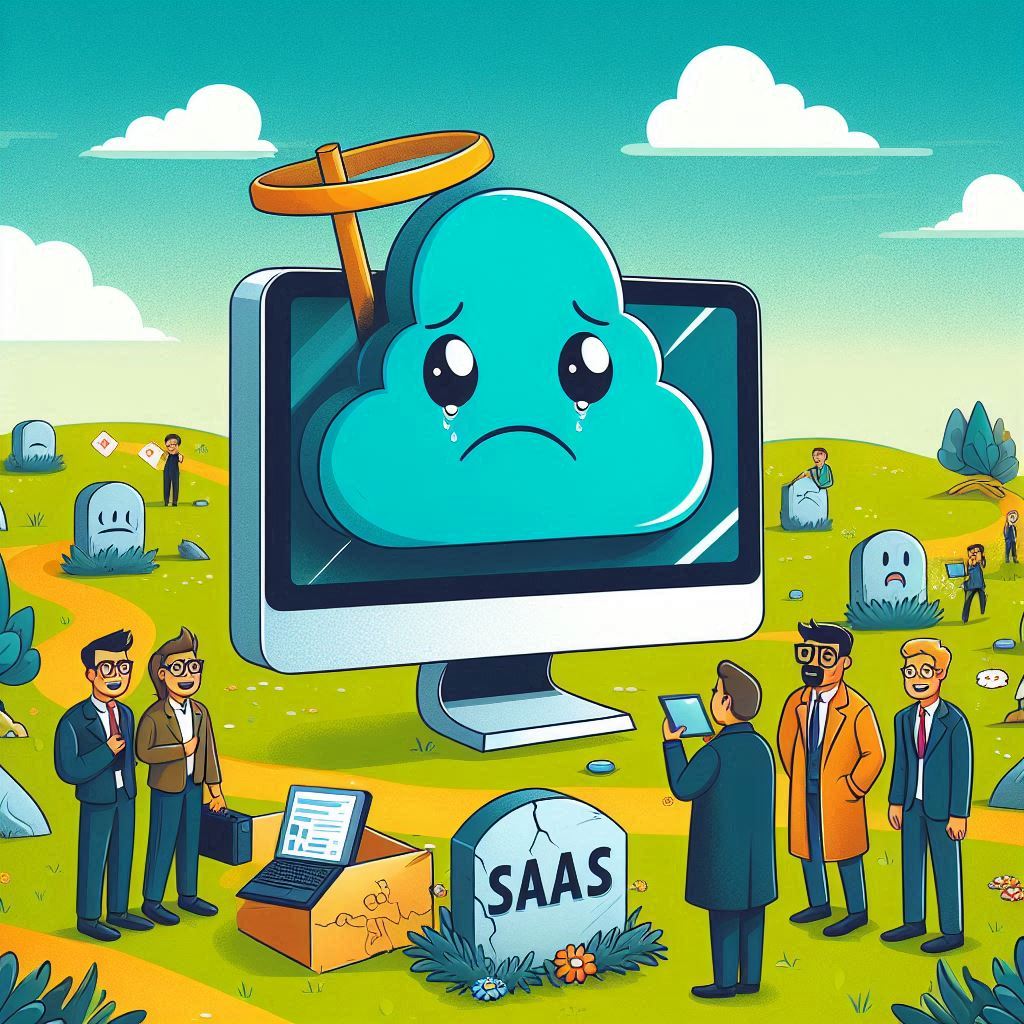
“SaaS is Dead.” This phrase has been whispered among startups and venture capitalists in recent years. Of course, this does not mean that the SaaS business model itself is disappearing. Rather, SaaS remains the most widely used form of software delivery and is the foundation for many companies. However, its “growth formula” is undoubtedly changing.
There are several structural changes behind this. First, the maturation of the SaaS market. In many categories, winners have already been decided, leaving limited room for new entrants to succeed. Second, the rise in CAC (customer acquisition cost). Advertising costs have been skyrocketing year after year, making the traditional “buy traffic and recoup through LTV” model increasingly difficult to sustain.
Additionally, advancements in generative AI and automation technologies have made it possible to offer solutions that were once complex in a simpler, more affordable manner. The “efficiency” and “automation” that SaaS providers once sold are now becoming commoditized from a technical standpoint.
In this environment, SaaS companies must transition from being mere monthly subscription-based software providers to more complex business models directly tied to customer value, such as “performance-based” or “service-integrated” models.
For example, a hybrid model combining “SaaS + human services.” Or shifting to a model where customer value and payment align, such as “usage-based pricing.” Additionally, a strategy to platformize and integrate into the entire customer workflow, thereby enhancing ecosystem lock-in, is also effective.
The phrase “SaaS is Dead” essentially refers to the end of traditional SaaS. The model of providing software through monthly subscriptions and scaling for growth has become a commoditized approach that anyone can replicate. What is now required is a serious commitment to addressing how to directly contribute to customer business outcomes and how to continuously deliver value over the long term.
That is why SaaS providers are now being called upon to “redefine” and “redesign.” This is a phase where everything—from the product itself to the delivery method, pricing model, and approach to customer success—must be reevaluated.
SaaS is not dead. It simply cannot survive without evolving.