

This is TAIKI from Utah! With natural disasters becoming increasingly frequent in recent years, what kind of measures and developments are being implemented in the United States?
The term “ecosystem” is often used in biology. However, it is now also used in economic systems.
This ecosystem not only accelerates economic growth, but also holds the key to enhancing our resilience in the face of natural disasters.
An Ecosystem That Accelerates Innovation
In the United States, this ecosystem is the fundamental cause of the positive economic cycle.
・ High Success Rate of Businesses:There is a culture of taking risks and a tolerance for failure. The environment is conducive to entrepreneurship, and the diversity of people who are willing to take risks has led to the creation of many startups and a high success rate.
・Concentration of talented individuals: Many students are drawn to graduate schools, particularly in the sciences, because they can earn money while conducting research. Talented researchers and doctors from renowned universities such as Harvard and MIT remain in the region, contributing to its remarkable development.
・Support from successful entrepreneurs: Successful entrepreneurs provide financial support and advice to the next generation of startups, creating a virtuous cycle.
・ Talent mobility: Talent mobility creates a virtuous cycle, and the interaction of people with different backgrounds helps generate new ideas.
So how does this ecosystem enhance disaster resilience?
An ecosystem for building a disaster-resilient society
Natural disasters are an unavoidable reality, and economic ecosystems are greatly affected by them. In the United States, the development of ecosystems for natural disasters is progressing based on the following three pillars.
・Withstand: Build robust infrastructure capable of withstanding the impact of disasters.
・Adapt to: Possessing the ability to respond flexibly to changing circumstances.
・Recover: Rapidly returning to the original state, or even a better state, after a disaster occurs.
Within the economic ecosystem, efforts are also underway to develop an ecosystem that enhances disaster resilience against disasters that could impact the economy.
Technology-enabled disaster resilience
Current uses of technology
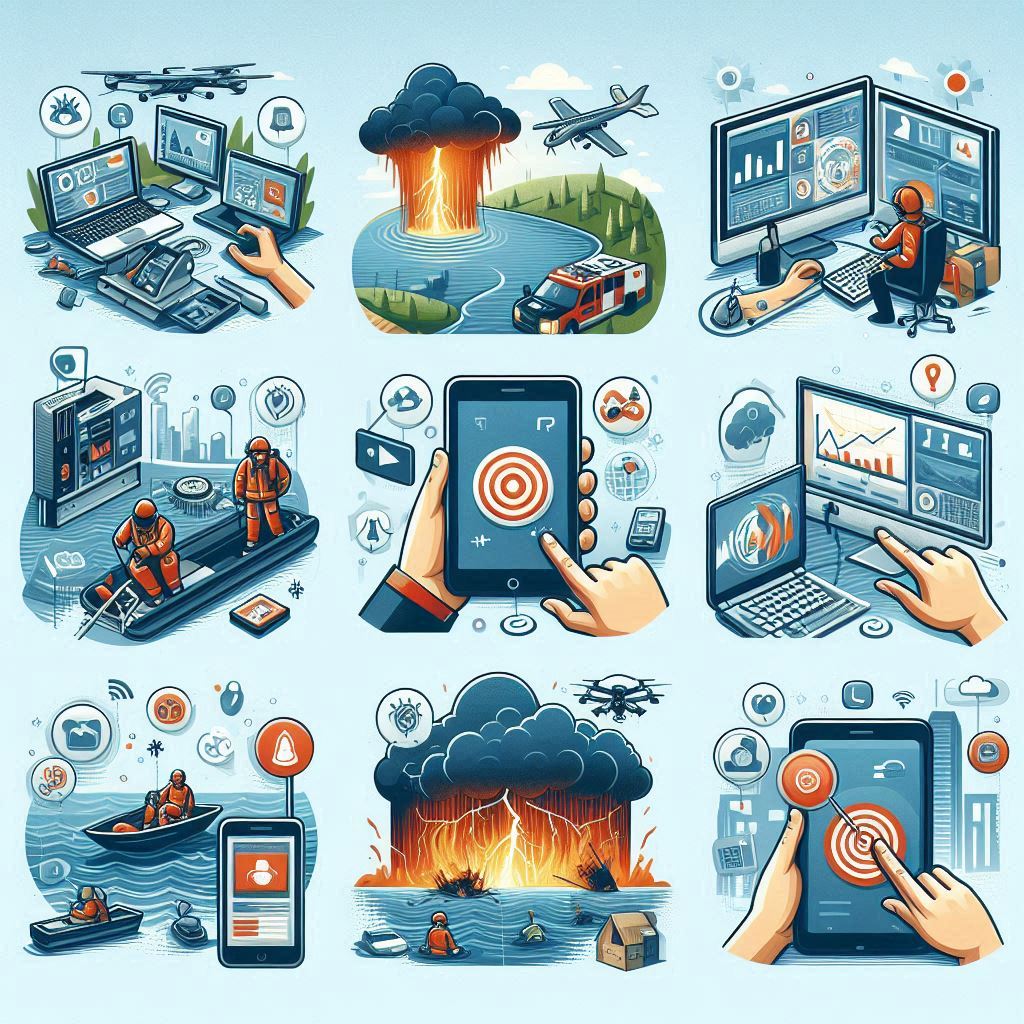
・Disaster prevention digital twins: These create virtual replicas of physical locations. This helps to simulate and plan how large-scale disasters will occur, how to evacuate, and how to rebuild affected cities.
・Drones: Drones enable access to disaster-stricken areas and dangerous zones that are inaccessible to humans. By leveraging AI, drones can be operated autonomously to quickly assess damage and deliver supplies.
・Disaster Chatbots: This system uses AI to automatically communicate with disaster victims, providing evacuation instructions and individualized evacuation advice. This helps reduce stress for victims and alleviate the burden on disaster response headquarters.
・ Resilient Infrastructure and Urban Planning: In modern times, the focus has shifted from “building sturdy structures” to “rebuilding and restoring cities as quickly as possible even after a disaster occurs.” Transportation networks and water supply systems are also planned to be restored quickly in the event of a disaster, and it is necessary to rebuild stronger systems and cities than before to reduce future vulnerabilities. To achieve this, it is essential to diversify production bases and avoid concentration, which will help find alternative measures and facilitate rapid recovery.
Skills required by the ecosystem
To combine these solutions and technologies and make them function effectively, not only technical skills but also human skills are essential.
・Communication (problem solving and critical thinking): The ability to make quick decisions under pressure and convey those strategies to people in a concise manner
・Collaboration: Seamless coordination across diverse organizations and agencies during disasters
・Adaptability and flexibility: The ability to adjust plans and strategies in response to new information and changing circumstances
・Leadership: The ability to guide teams and communities in chaotic situations
The potential of ecosystems
The virtuous cycle of the US economy is supported by the development of these ecosystems and their high turnover rate.
In recent years, the US has also been focusing on developing ecosystems to deal with natural disasters, suggesting that the economy is greatly affected by natural threats. Natural disasters are difficult to predict and cannot be avoided, but systems are beginning to be developed to improve the accuracy of disaster level predictions and to quickly rebuild infrastructure that is more resilient than before.
While leveraging the power of nature, we are constantly challenged to rebuild our resilience in the face of disasters. By growing within these new ecosystems and combining technology with human skills, we will be able to predict future disasters more accurately and mitigate their impact.
Source
Disaster Risk Management | WORLD BANK GROUP