
This is TAIKI from Utah. Now that we have overcome the pandemic, what kind of changes are taking place in the medical field?
In recent years, technological advancements have dramatically transformed our daily lives, and their impact on the healthcare sector is equally profound. In particular, the pandemic that swept the globe starting in 2020 forced an urgent, fundamental reevaluation of how healthcare is delivered.
Issues such as the strain on emergency medical services during the pandemic and the lack of adequate healthcare in rural areas had become extremely severe.
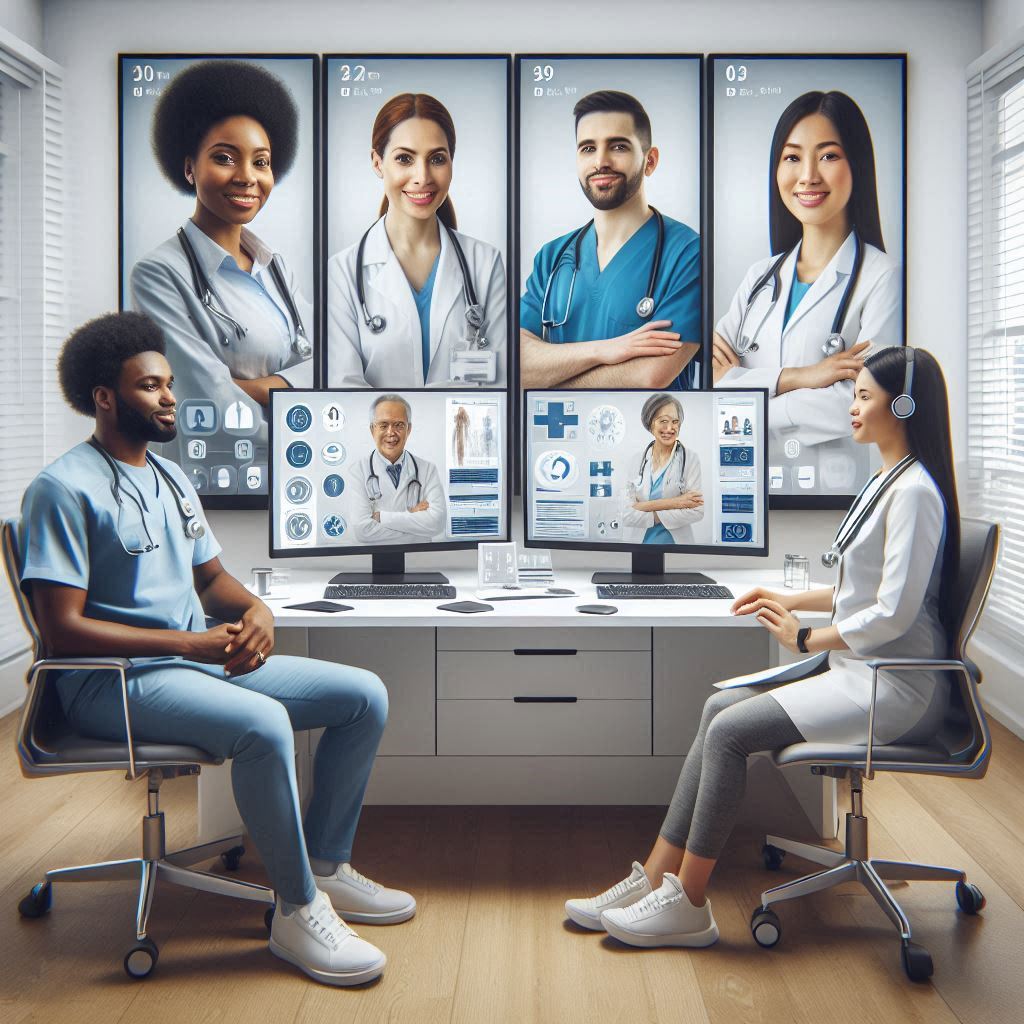
In such circumstances, the development of “telemedicine(Telehealth) ” and “digital health” has emerged as a ray of hope. Medical consultations and treatments conducted via the internet have evolved at an astonishing pace, bringing new possibilities to the healthcare field.
The economic impact of telemedicine
The spread of telemedicine is not only enhancing the convenience of healthcare but also beginning to have a significant impact on the U.S. economy.
・ Cost reduction and efficiency in healthcare: Telemedicine eliminates the need for patients to travel long distances to hospitals, significantly reducing transportation costs and time spent on commuting. This provides substantial relief for household budgets. For healthcare providers, it also streamlines the time and effort required for consultations, enabling them to treat more patients. Such cost reductions and operational efficiencies are expected to generate economic benefits on the scale of hundreds of billions of dollars annually, making telemedicine a game-changer in addressing the ongoing issue of rising healthcare costs in the United States.
・Improved access to healthcare and job creation:People living in remote or underserved areas can now access high-quality medical services without geographical constraints. This leads to earlier disease detection and appropriate treatment, contributing to long-term cost containment in healthcare. Perhaps most importantly, the “barrier of mobility” has been eliminated. Especially for elderly individuals who face significant physical challenges, the ability to receive medical care from the comfort of their own homes brings immeasurable peace of mind. This new wave is also injecting vitality into the economy. Demand for new digital health-related services and products, such as telemedicine platforms, health management apps, and wearable devices, is exploding. As a result, many startups have emerged, creating new jobs. These new jobs not only contribute to economic activity but also form the foundation for a more stable and human-centered healthcare delivery system. Particularly in the B2B (business-to-business) sector, which supports transactions between companies, venture capital (VC) investments are actively flowing in, strongly driving this growth.
The Changing Face of Healthcare
The remarkable evolution of AI (artificial intelligence) is further accelerating the development of telemedicine. AI is making groundbreaking contributions to the medical field in the following ways.
・High-precision diagnosis and personalized treatment: AI can detect subtle signs that the human eye might miss, enabling more accurate disease diagnosis. It’s like having another experienced expert physician by your side at all times. Additionally, by proposing optimal treatment plans tailored to each individual patient, we can receive “medical care that fits us perfectly.”
・Changes in the roles of medical professionals: By taking on tedious administrative tasks and data analysis, AI enables medical professionals to spend more time on what truly matters—connecting with patients on a human level. Patients, in turn, receive more care delivered by the warm touch of human hands rather than mechanical responses. AI demonstrates the potential for humans and technology to collaborate and significantly enhance the quality of healthcare.
The U.S. economy and future prospects: New growth driven by healthcare
Digital health and telemedicine play a very important role in the U.S. economy. The biotechnology industry as a whole has already generated more than $3 trillion in economic impact and created millions of jobs. This growth will continue, and the healthcare sector will be a powerful driver of economic growth.
In particular, the convergence of AI and digital health is expected to lead to the following future developments.
・Further evolution of preventive healthcare: Wearable devices and AI will work together to create systems that predict and warn of risks before illness occurs. This will enable people to lead healthier lives and further reduce healthcare costs.
・Reducing healthcare disparities: The spread of telemedicine will further narrow regional healthcare disparities, bringing us closer to a society where everyone can access high-quality healthcare equitably. This will also contribute to the overall well-being of society.
・Expansion of the global healthcare market: Digital health technologies developed in the United States will spread worldwide and have the potential to drive the economy as a new export industry.
The development of telemedicine and AI is not merely a technological innovation, but a “revolution” that will fundamentally transform the US healthcare system and economic structure. This revolution will continue to improve our health and quality of life while also injecting new vitality into the economy.
Sources
How Telehealth Improves Revenue, Cost, and Quality (healthcatalyst.com)
The Economic Benefits of Digital Health Interventions (mahalo.health)